
HVAC Automation: Zones, Thermostats, Interlocks — 'Don't Fight the HVAC'
Heating and cooling are the points where a "smart home" can make the biggest difference... or become the biggest source of frustration. Because HVAC isn't a lamp. It has inertia, protection logic, timers, and often its own "brain" (local controllers, anti-short-cycle, defrost, etc.).
This is why the most useful principle in every project is one: Don't fight the HVAC. Cooperate with it.
In this article, we clarify simply what zones, thermostats, and interlocks mean, and the common mistakes that make a system "seem broken" when in reality it is... poorly designed.
1) What "Zones" Mean and Why They Are Everything
A zone isn't "a room". A zone is a space (or group of spaces) that:
- has similar thermal characteristics (sun/shade, glazing, orientation),
- has a similar usage schedule,
- can be controlled independently (by fan coil, valve, split, VAV, VRF, etc.).
If a house has a south living room with glass walls and north bedrooms, making them "one zone" means:
- the south will overheat/overcool,
- the north will lag behind,
- and the user will be adjusting setpoints all day.
Correct zones aren't a luxury. They are the reason automation can bring comfort + economy without tiring you.
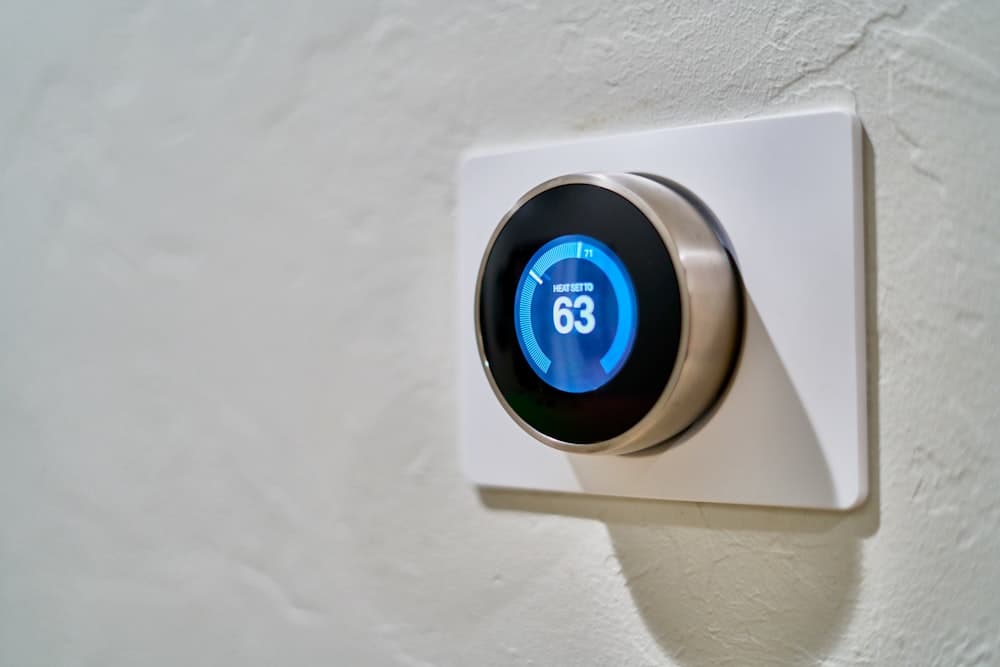
2) Thermostat: Not "A Button", But The Referee
A thermostat doesn't "turn on the AC". In essence:
- it decides when and how much energy is needed,
- based on temperature, setpoint, and often mode (comfort/eco/sleep/away).
The problem in most homes isn't "missing a thermostat". It's that there are:
- many thermostats that don't agree,
- setpoints changing constantly,
- and ultimately a system running without a stable target.
In proper architecture, the thermostat (or zone logic) acts as a unified referee: it gives a clear command and lets the HVAC do what it knows how to do.
3) Interlocks: The "Safety Rules" That Avoid Chaos
Interlocks mean: rules that prevent wrong operations. Without interlocks, a system might do things that look "smart" on paper but are catastrophic in practice.
Classic examples of interlocks:
- Window/Balcony open → HVAC Eco or Off (to avoid cooling the street)
- Heating and Cooling don't run together (especially in systems with multiple sources/circuits)
- Minimum run times / restart delay (to protect compressor or circulator)
- Priorities (e.g., in 2 bodies: first balancing, then boost)
These aren't "extras". They are what make the system feel high-quality and calm, not nervous.
4) "Don't Fight the HVAC": What It Really Means
Here is where many fall into the trap: trying to make automation "control everything" in a way that cancels the machine's logic.
4.1 Don't chase the setpoint every 5 minutes
HVAC needs time. If you change setpoint constantly:
- the system never stabilizes,
- cycles become more frequent,
- comfort worsens.
4.2 Don't do hard ON/OFF like it's a lamp
Especially in splits/VRF, continuous ON/OFF:
- causes wear,
- increases consumption,
- creates bad feeling (drafts, sudden changes).
"Smart" usually means changing mode (Comfort/Eco/Away) and not playing "trigger" with the compressor.
4.3 Respect times and protections
Defrost, anti-short-cycle, building thermal inertia... All these mean commands must be calm and infrequent, not "nervous".
5) Comfort / Eco / Away: The Most Efficient Automation Language
In homes and hotels, the most mature model isn't "turn it off when I leave". It is state management:
- Comfort: when the space is used
- Eco: when we leave for a bit (or it's empty)
- Away: when we leave for many hours/days
- Sleep: night behavior
This allows:
- keeping comfort,
- cutting waste,
- without punishing the user with "coming back to a freezing/boiling house".
6) The Most Common Mistakes That Make HVAC "Look Problematic"
- One zone for everything: the house never balances.
- Incompatible command sources: AC app + automation + third-party thermostat → they fight.
- Absence of interlocks: window open and system running at full blast.
- Overly "tight" settings: system chases tenths of a degree, while the building can't.
- Bad temperature sensor: wrong position (sun, near heat source, drafts) → wrong decisions.
Conclusion
HVAC automation isn't about making the house "obey". It's about making the house cooperate with its physics, its usage, and the equipment's protections. Correct zones, a clear role for the thermostat, and correct interlocks are what transform air conditioning from a "mess with apps" into a calm infrastructure of comfort.
Related Articles

Dynamic Electricity Tariffs: How a Smart Home Turns Hourly Prices into Real Savings
Dynamic pricing has arrived in Greece: hourly electricity rates, HEDNO smart meters, and automation that shifts your loads to the cheap hours without you thinking about it.
Read more →
10 Things You Didn't Know a Smart Home Can Do
Smart home automation is far more than app-controlled lights. Here are 10 practical capabilities that improve comfort, safety, and energy efficiency.
Read more →