
Home Cinema: On-wall, In-wall, Ceiling Speakers (and how to choose without regrets)
In home cinema, everyone talks about amplifiers, Dolby Atmos, and "how many channels". In practice, however, 80% of the result is determined by the speakers and how they "sit" in the room. And here comes the classic dilemma: on-wall, in-wall, or ceiling?
There is no single correct answer for everyone. There is the correct answer for:
- the house (new construction or retrofit),
- aesthetics (invisible vs visible),
- sound requirements (performance vs discreetness),
- and budget/work (drywall, wiring, reinforcements).
1) What Each Type Means
On-wall (Wall-mounted)
Speakers that hang/mount on the wall (slim cabinets or more "standard").
Where they shine:
- Very good balance between sound and practicality
- Easier installation/maintenance than in-wall
- Usually better performance than "super slim" in-wall (not always, but often)
What to watch out for:
- They remain visible (aesthetics)
- Need proper mounting and attention to wiring/channels
Ideal for: Living rooms where you want "good cinema without digging" and cases where you want to be able to upgrade later.
In-wall (Recessed)
Speakers that go inside the wall (drywall/masonry) with a grill.
Where they shine:
- Excellent aesthetic result (clean, minimal)
- Do not take up space, you don't touch/hit them, ideal for families/kids
- With proper study, they can sound very serious
What to watch out for (Important): Quality depends on the backbox/volume behind the speaker. If you leave it "playing inside the wall" without proper volume/insulation, it can have: sound leakage to adjacent rooms, unwanted resonances, and uneven bass. Requires correct "space" in the wall (studs, insulation, electricals) and is a more "permanent" solution.
Ideal for: New construction or serious renovation, and spaces where you want it to look "invisible" but sound premium.
Ceiling
Speakers in the ceiling. Here there is a big misunderstanding: "all in ceiling" vs "Atmos in ceiling".
Ceiling for Atmos / Height channels (Correct Use Case): For Dolby Atmos (height speakers), ceiling is the most logical choice. Because Atmos wants sound "from above" (height layer) and the ceiling is the natural position for this channel.
Ceiling as Main L/C/R Speakers (Usually Wrong): Putting the main speakers in the ceiling (left/center/right) in a cinema setup usually gives: wrong "image" (dialogues seem to come from above), bad stereo stage, and less cinematic feel.
Ideal for: Atmos heights, background music / multiroom zones, and special cases where nothing else is allowed.
2) How They Affect Sound (With Simple Criteria)
(a) Imaging / "Where Dialogue Comes From" Center at correct height = dialogue in front, "on the screen". Ceiling L/C/R = dialogue "from the sky" → ruins cinema illusion.
(b) Bass and Body Bass is handled by the subwoofer anyway. But main speakers must have "body" in the mid/low range. In-wall without correct back volume can sound "thin" or have resonance.
(c) Leakage to Adjacent Rooms In-wall/ceiling can transfer vibrations/sound more easily if proper soundproofing/box isn't used.
3) What We Usually Prefer in Serious Home Cinema
Scenario A: Living Room (High Performance Without Digging)
- On-wall for L/C/R and surrounds
- Ceiling only for Atmos (if installed)
- 1–2 subwoofers (depending on space)
Scenario B: New Build / Premium Minimal Aesthetics
- In-wall for L/C/R and surrounds (with correct backbox)
- Ceiling for Atmos
- Subwoofer(s) hidden/integrated by design
Scenario C: "I Just Want Nothing Visible"
- In-wall where possible
- Ceiling for Atmos
- Caution: don't end up with "all ceiling" because you will gain aesthetics and lose cinema experience.
4) The Trap: "I'll Put Ceiling Everywhere Because It's Easier"
I understand — it's clean, easy, invisible. But for home cinema, sound must come from in front and around you, not from above. Ceiling everywhere fits ambient music, not "movie with dialogue on screen".
5) Conclusion (To Remember)
- On-wall: the best compromise of performance/ease/upgrades
- In-wall: premium aesthetics + very good result if done right (backbox/insulation)
- Ceiling: ideal for Atmos, not for main L/C/R (unless you are in a forced compromise)
Related Articles
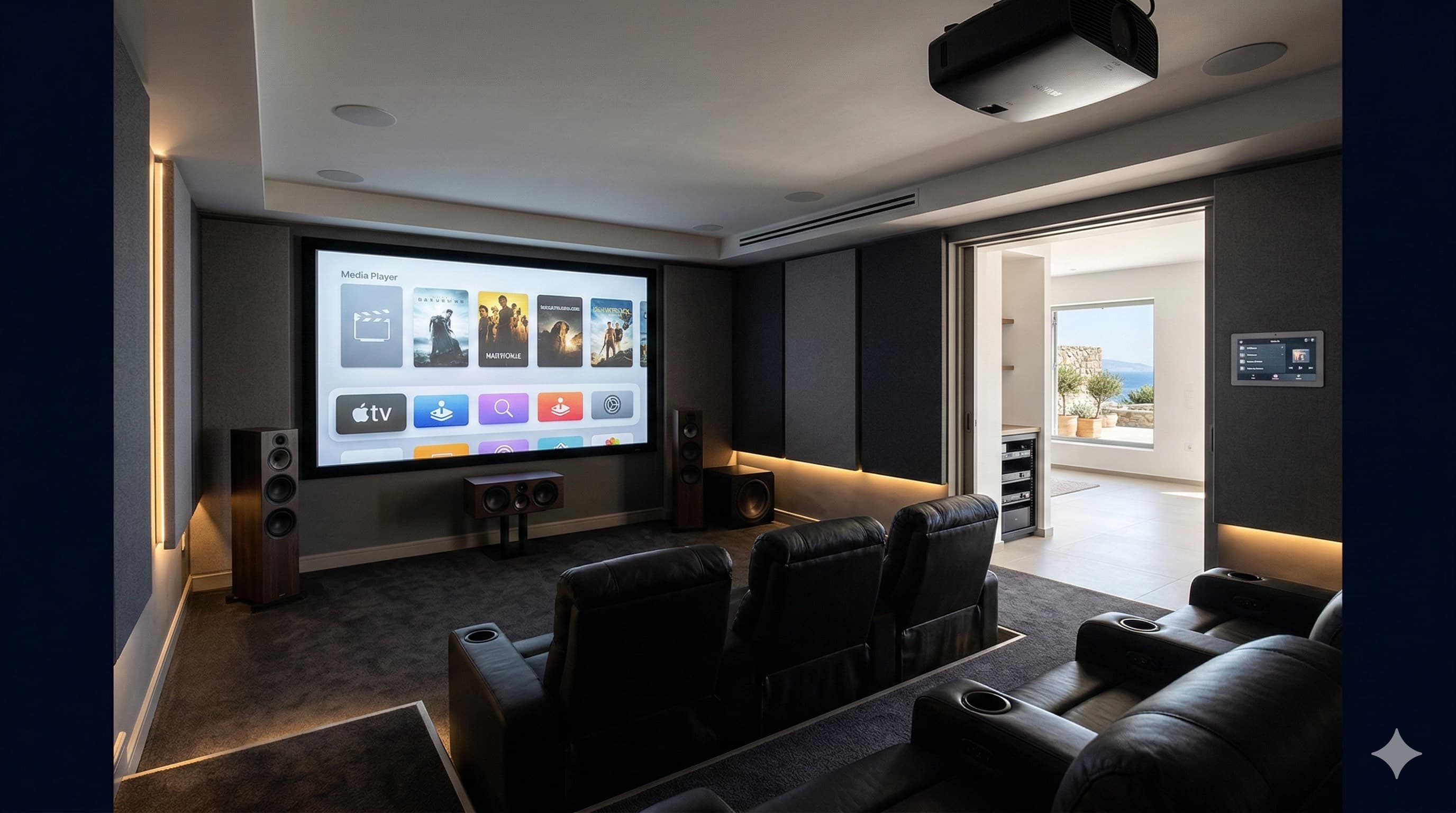
Home Cinema: Dolby Atmos, DTS:X and HDMI vs Optical — A Survival Guide
Dolby Atmos, DTS:X, HDMI ARC, Optical… Confused? A simple guide to understand what you hear and how to connect it right.
Read more →
Cyber Resilience Act: What Changes for Smart Device Security and What to Look for When Buying
From September 11, 2026, IoT manufacturers must report actively exploited vulnerabilities within 24 hours. The EU is finally setting rules for smart home security. Here's what it means for you.
Read more →