

Home Cinema: Dolby Atmos, DTS:X and HDMI vs Optical — A Survival Guide
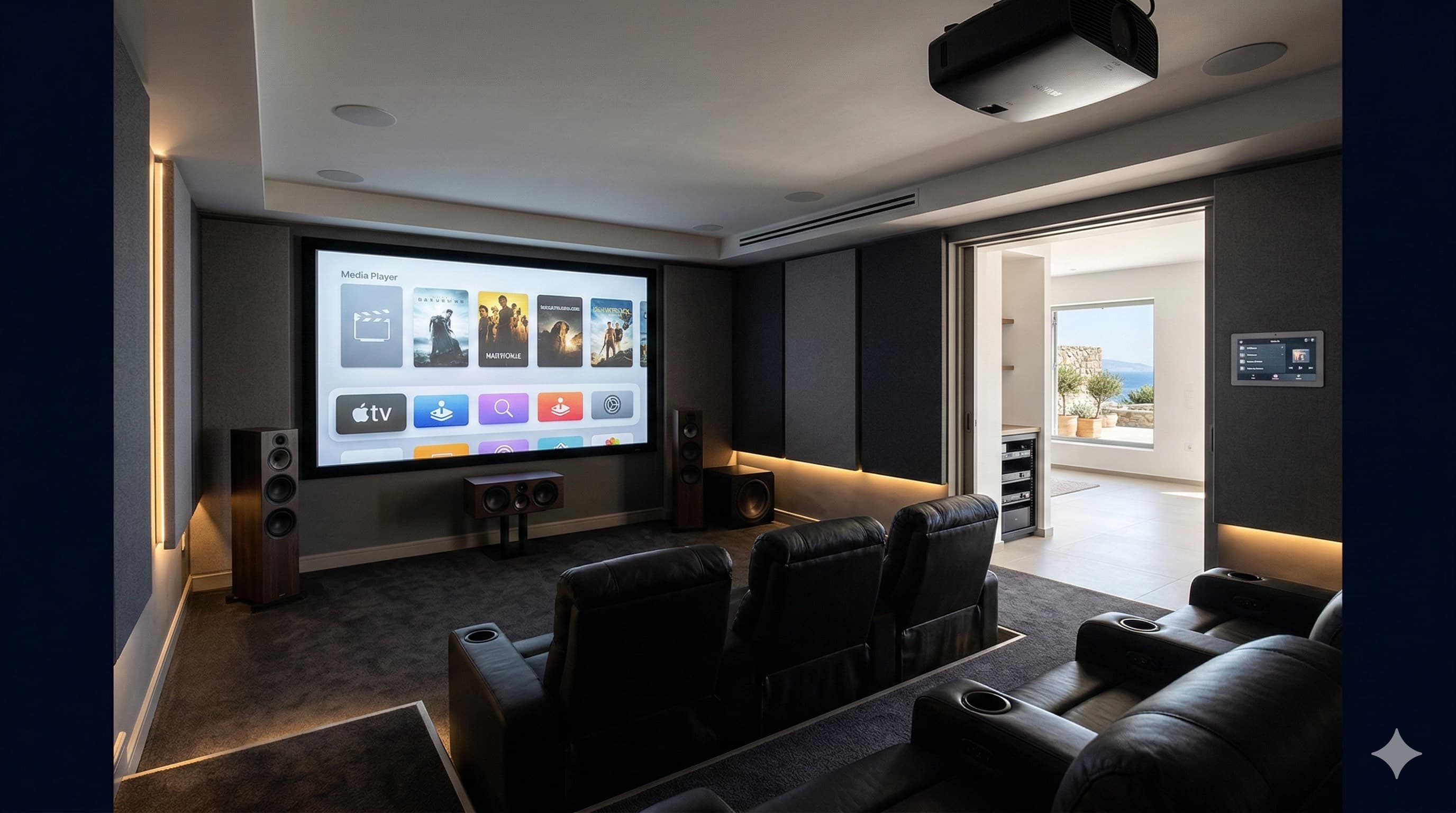
In the world of home cinema, marketing runs faster than understanding. You hear about Atmos, DTS:X, eARC, 8K, optical fibers… and in the end, you don't know if what you bought is playing what it should.
In this article, we sort out audio formats and connections so you can get the most out of your equipment.
1) Audio Formats: What Is What
The Old Guard (Channel-based)
Here sound is recorded in channels: 5.1 (5 speakers + 1 sub) or 7.1.
- Dolby Digital / DTS: The classic compressed formats of DVD.
- Dolby TrueHD / DTS-HD Master Audio: Lossless audio of Blu-ray. Excellent quality, but "fixed" to channels.
The New Era (Object-based)
Here sound isn't "the rear right channel". It is "objects" in space. The sound engineer says "the helicopter passes over the head" and your receiver decides which speakers will play to achieve it.
- Dolby Atmos: The most widespread (Netflix, Disney+, Blu-ray). Requires height speakers (ceiling or up-firing) for the full experience.
- DTS:X: The competitor. More flexible in speaker layout, but less frequent in streaming.
The "Up-mixers" (How do I hear 3D sound from a simple signal?)
If you watch news or YouTube (stereo), how do all speakers play? This is where up-mixers come in:
- Dolby Surround (DSU): Takes stereo or 5.1 and "spreads" it to height speakers too.
- DTS Neural:X: The equivalent from DTS. Very good at creating atmosphere.
2) Connections: HDMI vs Optical
This is where the biggest mistake happens.
Optical (Toslink)
- Classic connection, easy.
- Limit: Passes only up to simple Dolby Digital / DTS (5.1).
- Does NOT pass: Dolby TrueHD, DTS-HD, Dolby Atmos (with metadata).
- Use: Only if you have a very old receiver without HDMI.
HDMI (ARC / eARC) The only way for modern sound.
- ARC (Audio Return Channel): Passes compressed 5.1 and (sometimes) compressed Atmos (from Netflix).
- eARC (Enhanced ARC): Passes EVERYTHING. Lossless Atmos, TrueHD, DTS:X.
Conclusion: If you want Atmos, forget the optical fiber. You want HDMI.
3) How to Set It Up Right (Checklist)
- Source (TV/Apple TV) → Receiver: With "High Speed" (Premium/Ultra) HDMI cable.
- TV Settings: Audio must be on "Pass-through" or "Bitstream". If it's on "PCM", the TV converts sound to simple stereo (or simple 5.1) and you lose Atmos.
- Receiver: Ensure the display says "Dolby Atmos" or "DTS:X" when playing a movie. If it says "Multi Ch In", the source is decoding (not necessarily bad, but needs checking).
4) Myth: "Do I Need Ceiling Speakers for Atmos?"
- Ideally: Yes. 2 or 4 speakers in the ceiling give the real "rain/plane" experience.
- Compromise: "Up-firing" speakers (sitting on fronts and bouncing off ceiling). Work ONLY if you have a flat, low ceiling that reflects.
- Marketing: Soundbars promising "7.1.4" with DSP. They do a good job for their size, but they don't beat physics.
Conclusion
Home cinema is a chain: Good Source (Netflix/Blu-ray) → Correct Setting (Bitstream) → Correct Cable (HDMI) → Capable Receiver → Correct Speakers.
If you break one link (e.g., use optical fiber), Atmos disappears.
Related Articles
Home Cinema: On-wall, In-wall, Ceiling Speakers (and how to choose without regrets)
In home cinema, everyone talks about amps, but 80% of the result is determined by the speakers. See how to choose between on-wall, in-wall, and ceiling.
Read more →
PIR vs mmWave: A Guide to Presence Sensors That Actually Work
The dilemma is clear: PIR or mmWave? The right answer isn't 'one is better', but: what space do you have and what behavior do you want.
Read more →