
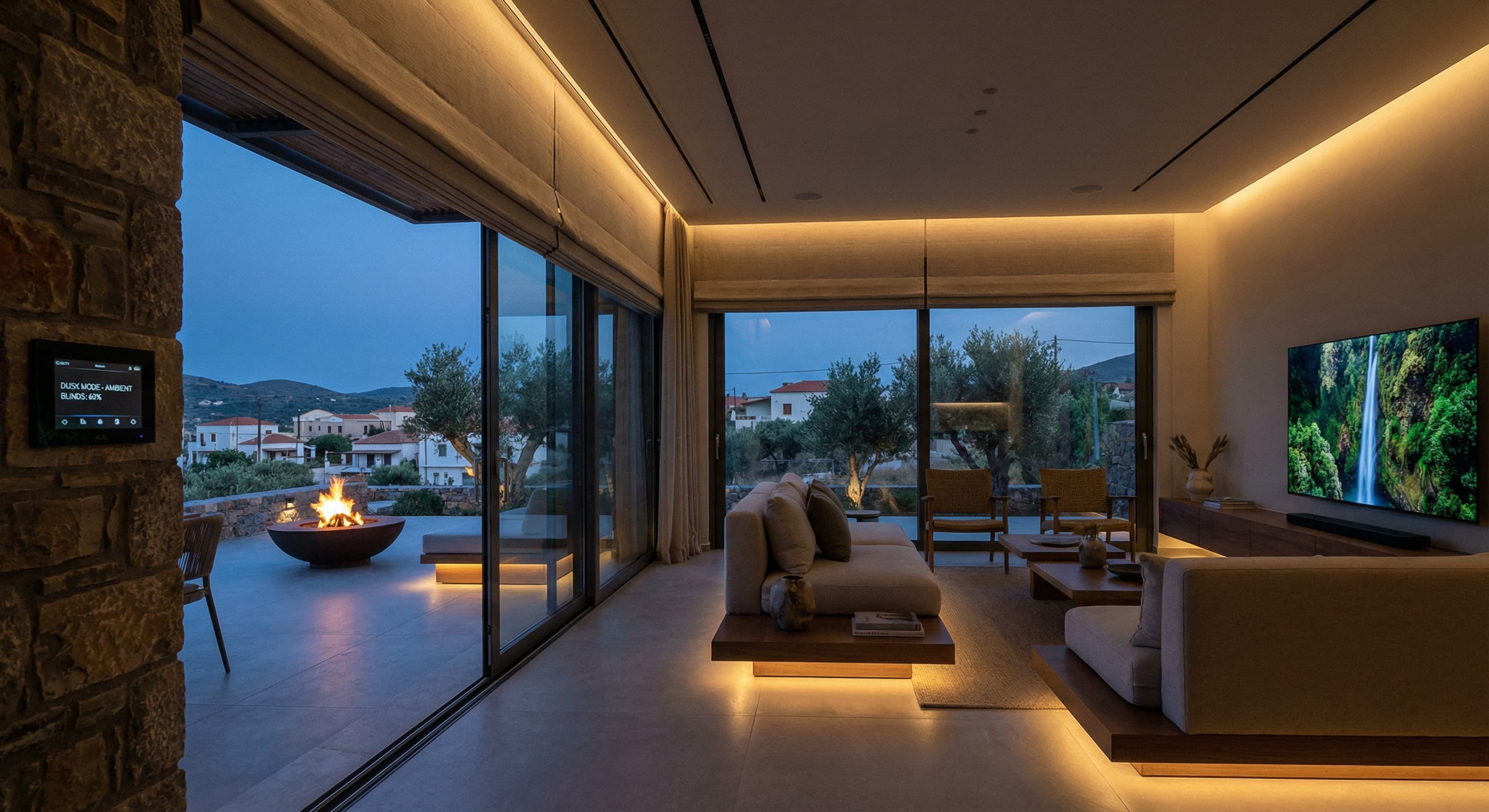
How an Existing Home Can Become 'Smart'
Many people believe that building automation is only for new homes or residences designed from the start with dedicated wiring.
The reality is different.
Today, there are many solutions that allow the upgrade of an already built home, even an apartment completed years ago. With wireless systems and smart devices, important automation functions can be added without major interventions in the existing installation.
The result is a home that is more comfortable, safer, and more energy-efficient.
Lighting Upgrades Without Rewiring
One of the easiest starting points for automation is lighting.
In an existing home, you can install:
- smart switches,
- wireless relays behind existing wall switches,
- smart bulbs,
- dimmers for light intensity control.
This enables functions such as:
- lighting control from your phone,
- lighting scenes for different moments of the day,
- automatic lighting activation under specific conditions.
And all this without requiring extensive reconstruction of the electrical panel.
Smart Heating and Temperature Control
Heating is one of the areas where automation can provide real benefits.
In an existing home, you can install:
- smart thermostats,
- wireless radiator valves,
- temperature sensors in different rooms.
This way:
- each room can have a different temperature,
- heating runs only when needed,
- energy consumption is reduced.
The difference in comfort and energy cost can be significant.
Shading and Roller Control
In many homes, roller shutters are still manual or controlled by a simple switch.
With wireless solutions, you can add features such as:
- shutter control from your phone,
- automatic movement at specific times,
- integration with lighting and home scenes.
For example, at night, with one button, the system can:
- lower all shutters,
- dim lights,
- arm the alarm.
A simple scenario can significantly change how the home operates.
Presence Simulation While You Are Away
An interesting feature that can be added is presence simulation.
When owners are away for several days, the system can create the impression that someone is inside the home.
For example:
- shutters can open in the morning and close at night,
- lights can turn on in different areas during evening hours,
- the system can switch lights off after a period of time.
Timings can include small variations so the result looks natural.
To an external observer, the home appears normally occupied.
Sensors That Protect the Home
In an existing home, wireless sensors can easily be added for:
- water leaks,
- smoke or fire,
- motion,
- door or window opening.
In case of a problem:
- the owner receives a mobile notification,
- automations can trigger (for example lights or alarm).
This gives the home an additional layer of safety.
Remote Home Control
One major advantage of modern systems is remote control.
Even when you are away from home, you can:
- control lighting,
- control heating or cooling,
- check home status,
- receive alerts for potential issues.
That makes home management much easier.
A Step-by-Step Upgrade Path
The key point is that an already built home does not need to become "smart" in one day.
Most installations can be done gradually.
For example:
- start with lighting,
- continue with heating,
- then add safety sensors,
- and later build automation scenes.
This allows the owner to adapt the system to real needs over time.
The Home Evolves With People's Needs
A home built years ago does not have to remain technologically static.
With modern wireless technologies, features can now be added that a few years ago were available only in new constructions.
The important thing is not to fill the home with gadgets.
The important thing is to create a space that:
- works more comfortably,
- is safer,
- consumes less energy,
- adapts better to the daily life of the people living in it.
Related Articles
Wireless KNX (KNX RF): a Smart Home Renovation Without Chasing Walls
You don't need to open walls to get professional automation. How KNX RF works, which devices exist, when to combine it with wired KNX, and when it beats options like Matter.
Read more →
10 Things You Didn't Know a Smart Home Can Do
Smart home automation is far more than app-controlled lights. Here are 10 practical capabilities that improve comfort, safety, and energy efficiency.
Read more →