
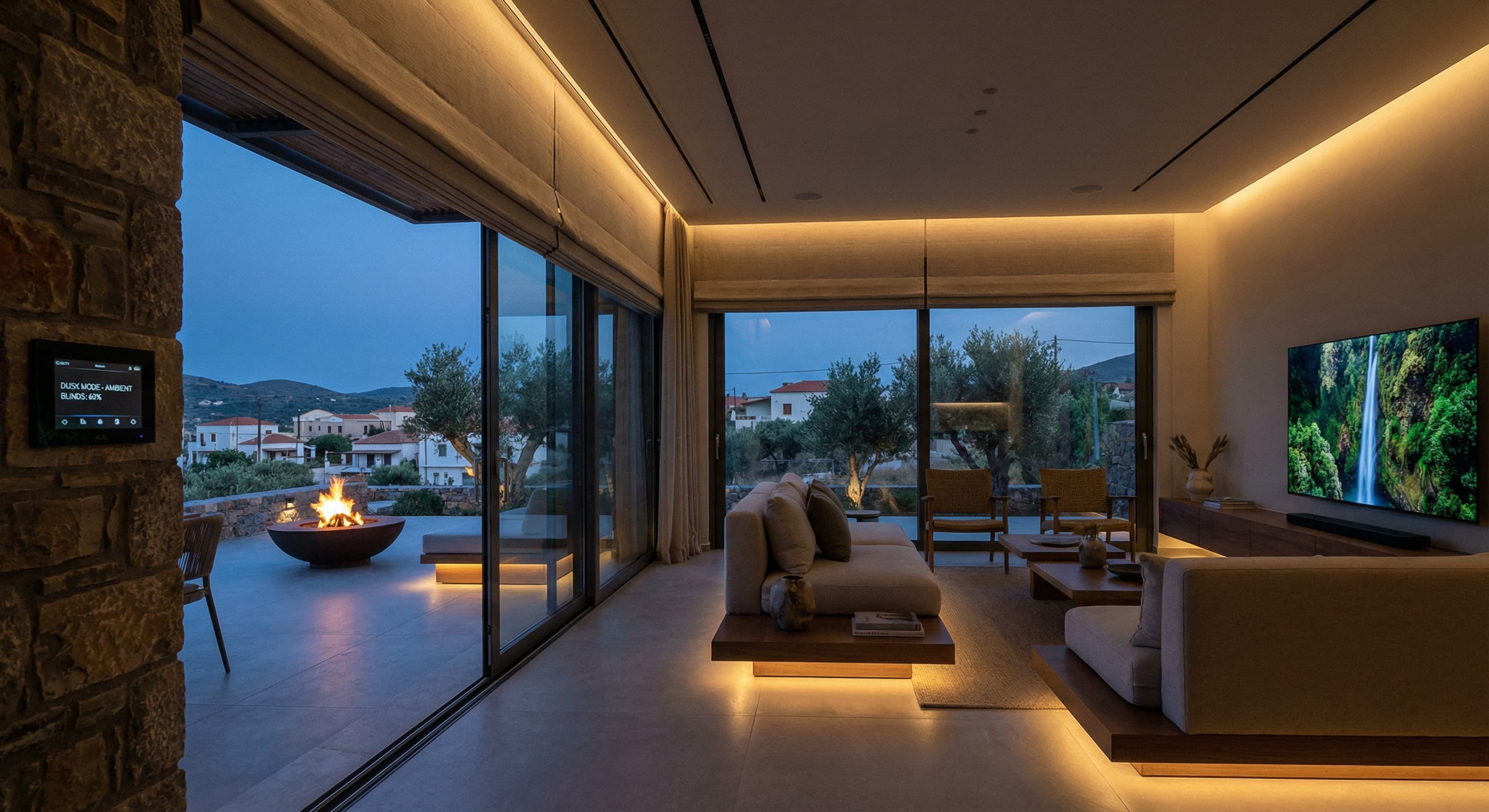
KNX vs Wi-Fi Smart Home: Why Choose Professional Automation

When someone thinks of a "smart home," they often start with a Wi-Fi bulb or a smart plug from a local store. It's an easy and affordable way to test the idea. But a smart gadget is different from comprehensive automation.
If your goal is to build a home that works stably, simply, and for years, it's worth looking at what a professional standard like KNX offers — especially for lighting, shading, and HVAC.
The Limitations of a Wi-Fi Smart Home (When Taken "Seriously")
Wi-Fi devices rely on the home router and wireless network. As you add more devices (bulbs, switches, sensors, cameras, speakers), it becomes easier to:
- Congest the network (many clients, interference, roaming issues, latency),
- Complicate maintenance (updates, resets, Wi-Fi/SSID changes),
- Increase cloud dependence (accounts, servers, subscriptions, policy changes).
And practically: in many DIY solutions, if the internet goes down or the vendor changes/closes services, the "smart" part is significantly reduced. Even when it doesn't go completely "dead," it often becomes... unpredictable.
What Makes KNX Different: Infrastructure, Not Gadget
KNX is an international standard for building automation with a "building-grade" philosophy. In its classic form, it operates on a dedicated bus cable, independent of Wi-Fi. That is: Wi-Fi is for users, streaming, and apps — not for depending on it to turn on a light.
Simply put: KNX is closer to an "electrical installation with logic" than "devices with an app."
Why Choose KNX
1) Decentralized Intelligence
In a KNX system, every device (sensor, button, actuator) has its own logic/microprocessor. If one device fails, the rest of the system continues to operate — the whole house doesn't "shut down" (fewer single points of failure).
2) Longevity & Interoperability
KNX has existed for decades and is used internationally in homes and commercial buildings. Most importantly: you are not "locked" into one manufacturer. Devices from many brands work together in the same project, protecting your investment over time.
3) Daily Stability
The user experience is simple: press a switch, it works. Scenes execute locally, quickly, and consistently. This is what makes a smart home feel "invisible" — and therefore correct.
4) Security (By Design + KNX Secure)
Wired communication is inherently harder to breach than wireless, while KNX Secure adds encryption/authentication for an even higher level of protection.
5) Scalability
A KNX project can grow significantly, with stable behavior, without turning Wi-Fi into a bottleneck.
Realistic Recommendation (Not "All or Nothing")
The most modern and practical model today isn't "KNX everywhere" or "Wi-Fi everywhere." It's the correct separation of roles:
- KNX for criticals: lighting, blinds/shading, HVAC, home scenes.
- Wireless (Zigbee / Thread / Matter) where convenient: sensors, retrofits, supplementary functions.
- Network properly set up for cameras, streaming, multiroom audio, and remote access.
This way, you get "building-grade" reliability where you need it, and flexibility where it makes sense.
Conclusion
If you want a smart home that works reliably for years, adds real comfort/security, and increases property value, KNX is the most professional foundation. Yes, the initial investment is higher than Wi-Fi gadgets. But what you are buying isn't "devices": it's infrastructure, with stability, interoperability, and longevity.
Related Articles
Wireless KNX (KNX RF): a Smart Home Renovation Without Chasing Walls
You don't need to open walls to get professional automation. How KNX RF works, which devices exist, when to combine it with wired KNX, and when it beats options like Matter.
Read more →
PIR vs mmWave: A Guide to Presence Sensors That Actually Work
The dilemma is clear: PIR or mmWave? The right answer isn't 'one is better', but: what space do you have and what behavior do you want.
Read more →