
Net Zero Homes 2026: How KNX Becomes the Key to the Energy Crisis and Sustainability
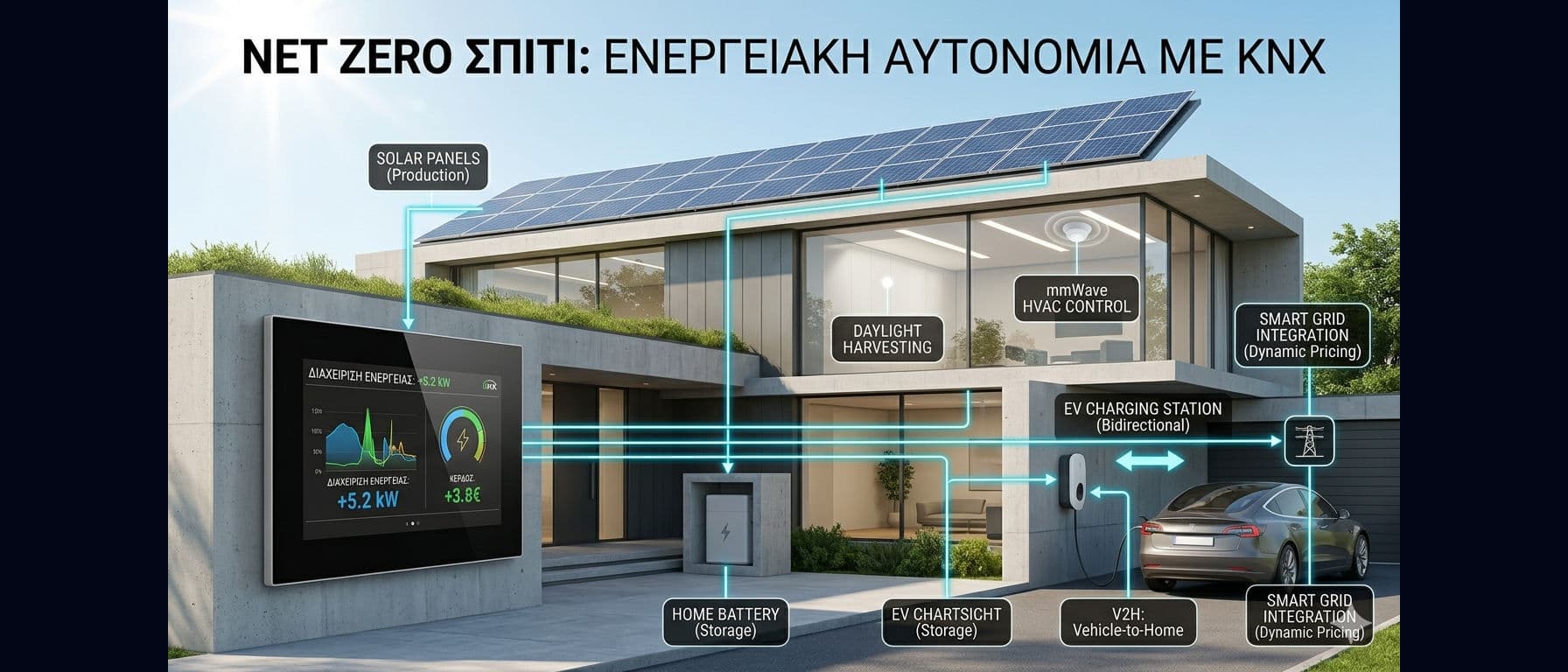
With the implementation of the European Green Deal, the energy performance of buildings in 2026 is no longer optional — it's a legal requirement. KNX is leading the charge, turning homes into autonomous energy hubs.
Smart Grid & Dynamic Load Management
Modern KNX systems communicate directly with the Smart Grid.
- Automated Decision-Making: The system monitors dynamic electricity prices. When the price is high, KNX shuts off non-critical loads or draws power from home batteries.
- Vehicle-to-Home (V2H): Your electric car becomes part of the house. KNX manages the bidirectional charging, using the vehicle's battery to power the home during peak hours.
Daylight Harvesting & HVAC Optimization
Resource savings are achieved through precision:
- Daylight Harvesting: Photocells measure incoming natural light and dim LED fixtures with 1% precision, cutting lighting costs by up to 40%.
- Occupancy-Oriented HVAC: Air conditioning runs in "economic mode" when mmWave presence sensors confirm a space is empty, ensuring no kilowatt-hour goes to waste.
Central Energy Reporting
Through screens like the JUNG LS TOUCH, users now have a full real-time view of consumption per room or per device. Predictive Maintenance even warns of potential faults in appliances before they raise consumption or fail.
The Sync-Teq Philosophy
In 2026, a "smart" home is first and foremost a "green" home. Investing in KNX isn't just about comfort — it's a tool for payback and environmental protection.
Related Articles

Dynamic Electricity Tariffs: How a Smart Home Turns Hourly Prices into Real Savings
Dynamic pricing has arrived in Greece: hourly electricity rates, HEDNO smart meters, and automation that shifts your loads to the cheap hours without you thinking about it.
Read more →
Energy Saving in Hotels: How Automation Cuts Operating Costs
Learn how smart sensors, HVAC control, and lighting management can reduce energy consumption by up to 40% without sacrificing guest comfort.
Read more →