

KNX 2026: How Artificial Intelligence and mmWave Sensors Are Transforming the Smart Building
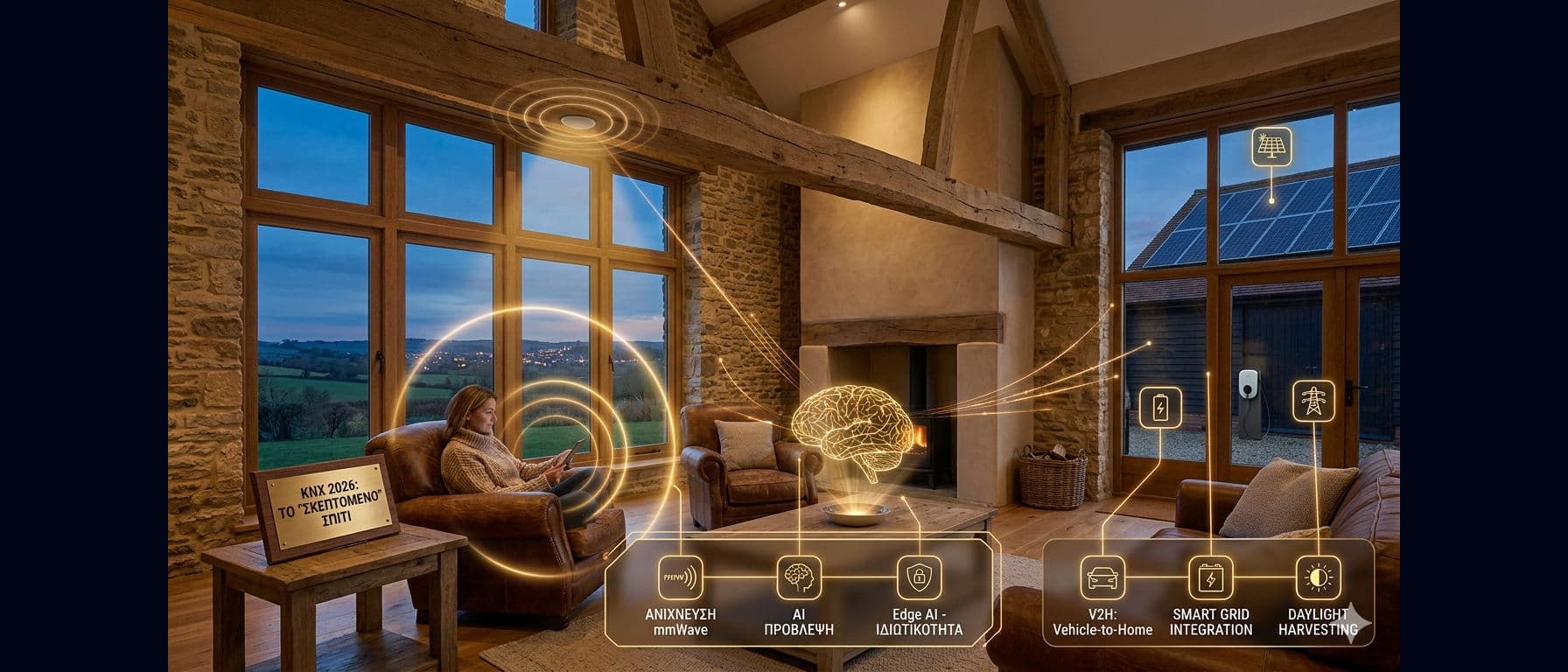
In the past, home automation relied on predefined scenes: "if this happens, do that." In 2026, KNX is evolving into a "thinking" ecosystem thanks to the integration of Predictive AI and new sensing technologies.
The mmWave (Radar) Sensor Revolution
The biggest technical upgrade this year is the wide adoption of mmWave sensors (such as the new HF Presence Detectors from ABB). Unlike traditional PIR sensors that rely on heat and significant motion, radar sensors:
- Detect breathing: They can sense a person's presence even when they remain completely still (e.g., reading a website).
- Penetrate materials: They work behind glass or thin partitions, enabling an "invisible" installation that doesn't affect the aesthetics of the space.
KNX IoT & Matter 1.4: Total Connectivity
With the introduction of KNX IoT Routers (such as Allorado's), KNX Classic now bridges seamlessly to Matter 1.4. This means:
- Your wired installations gain native IP connectivity.
- You can control high-end KNX switches, such as the JUNG LS TOUCH, from any Matter-certified app (Apple Home, Google Home), while keeping the stability of the wired network.
Edge AI: Privacy and Speed
Data processing now happens at the Edge (locally in the building). The home learns your habits — when you wake up, what light intensity you prefer — without sending information to the cloud, ensuring 100% privacy.
Related Articles
KNX vs Zigbee / Z-Wave / Thread / Matter: What Goes Where (Wired Backbone, Wireless Edge)
What should be infrastructure (backbone) and what can be edge? A practical guide to correct Smart Home architecture.
Read more →
Dynamic Electricity Tariffs: How a Smart Home Turns Hourly Prices into Real Savings
Dynamic pricing has arrived in Greece: hourly electricity rates, HEDNO smart meters, and automation that shifts your loads to the cheap hours without you thinking about it.
Read more →