
Balcony Solar and Standalone Batteries in Greece: What the New Ministerial Decision Allows (ΦΕΚ Β 5573/2026)
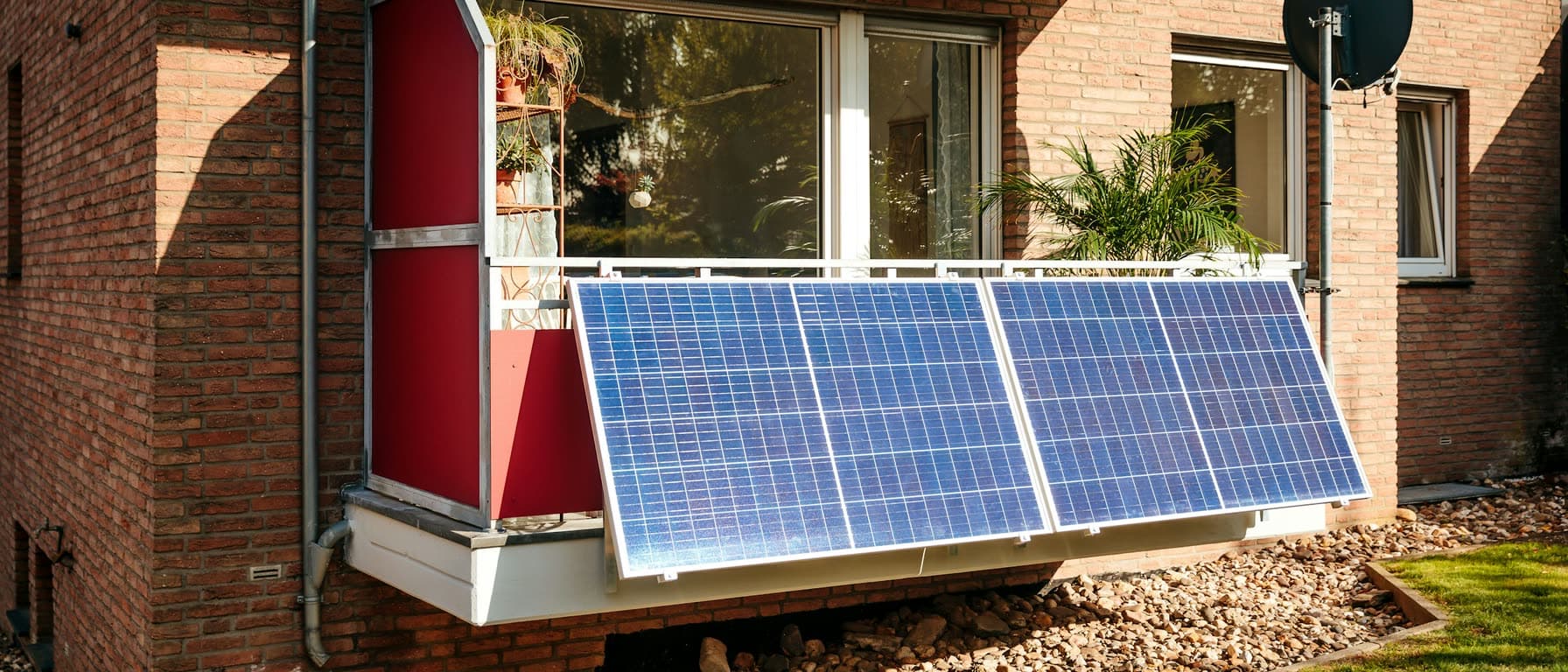
In short: Since 14 September 2026 Greece has a new self-consumption framework (Joint Ministerial Decision ΥΠΕΝ/ΔΑΠΕΕΚ/102876/1958/2026, ΦΕΚ Β 5573). It allows balcony solar up to 800 W, batteries without solar panels with zero grid export, and changes the rules for net billing. Balcony installations can start once HEDNO (ΔΕΔΔΗΕ) publishes its safety specifications, due by 31 October 2026.
In every case the same rule applies: energy you do not use at the right moment is lost. So the return depends not only on the equipment, but on how the home manages its consumption.
The decision at a glance
| Balcony solar | Standalone battery (no PV) | |
|---|---|---|
| Power limit | 800 W output, up to 1,000 W of panels per supply | Up to 100% of the supply's contracted capacity |
| Grid export | No, self-consumption only | No (zero export) |
| Surplus compensation | None | No surplus |
| Key requirements | Smart meter, active ΥΔΕ, online notification to HEDNO | Direction sensor, telemetry |
| When it starts | After HEDNO specifications (by 31/10/2026) | In force since the decision was published |
Balcony solar: what exactly is allowed
These are small systems, usually two panels and a microinverter, mounted on the railing or a stand on the balcony, feeding the home. The decision sets:
- Maximum output of 800 W and installed panel capacity up to 1,000 W, in total per supply point. The draft put out for consultation in July had a 900 W panel limit, which was raised in the final text.
- Self-consumption only. No energy sales and no bill credits.
- A mandatory HEDNO smart meter on the supply.
- An active installer declaration (ΥΔΕ) for the supply.
- Online notification through a HEDNO digital platform, expected to be live by year end.
- Safety specifications issued by HEDNO together with the Hellenic Organization for Standardization (ΕΛΟΤ), confirmed by a signed statement from an engineer or installer.
HEDNO may also designate network sections where new connections will not be allowed because of limited hosting capacity.
How much you will actually save
Realistic published estimates put a balcony system at about 500 kWh per year. At a final price of around €0.25/kWh, that is roughly €125 per year, but only if the energy is consumed the moment it is produced.
That is the catch. An apartment that is empty from morning to afternoon has a midday consumption of a few hundred watts: fridge, router, devices on standby. At its midday peak, an 800 W balcony system exceeds that, and the difference is simply lost.
Batteries without solar: the lesser known, and perhaps more interesting part
Individuals and companies can now install storage with no generation at all, to cover their own consumption:
- Power up to 100% of the contracted capacity of the supply. If the supply is too small, an upgrade may be needed.
- A power-flow direction sensor and telemetry.
- No energy injected into the grid.
- Simplified licensing. Low-voltage consumers are exempt from the bank guarantee, and the operator must handle requests with priority.
Why install a battery without sun? Because of dynamic tariffs. With hourly prices, the battery charges in cheap hours (usually midday or night) and covers the home during the expensive evening peak.
For homes that already have solar, a battery charged from the PV can be added. If the station is zero-export, it may also charge from the grid. On the non-interconnected islands the battery does not exchange energy with the grid.
What changes in net billing
- Surplus energy is compensated at the Day-Ahead Market price or at the Special Market Price (ΕΤΑ) published by DAPEEP.
- The three-party contract (consumer, supplier, RES aggregator) is replaced by two bilateral contracts.
- For household systems up to 10.8 kW, a single contract is signed with the supplier and the value of the surplus is credited on the bill.
- Collective self-consumption is extended to consumers in the same building or residential complex.
The practical takeaway: when surplus is paid at wholesale prices, which are often very low at midday, it pays to consume it yourself rather than send it to the grid.
Where automation comes in
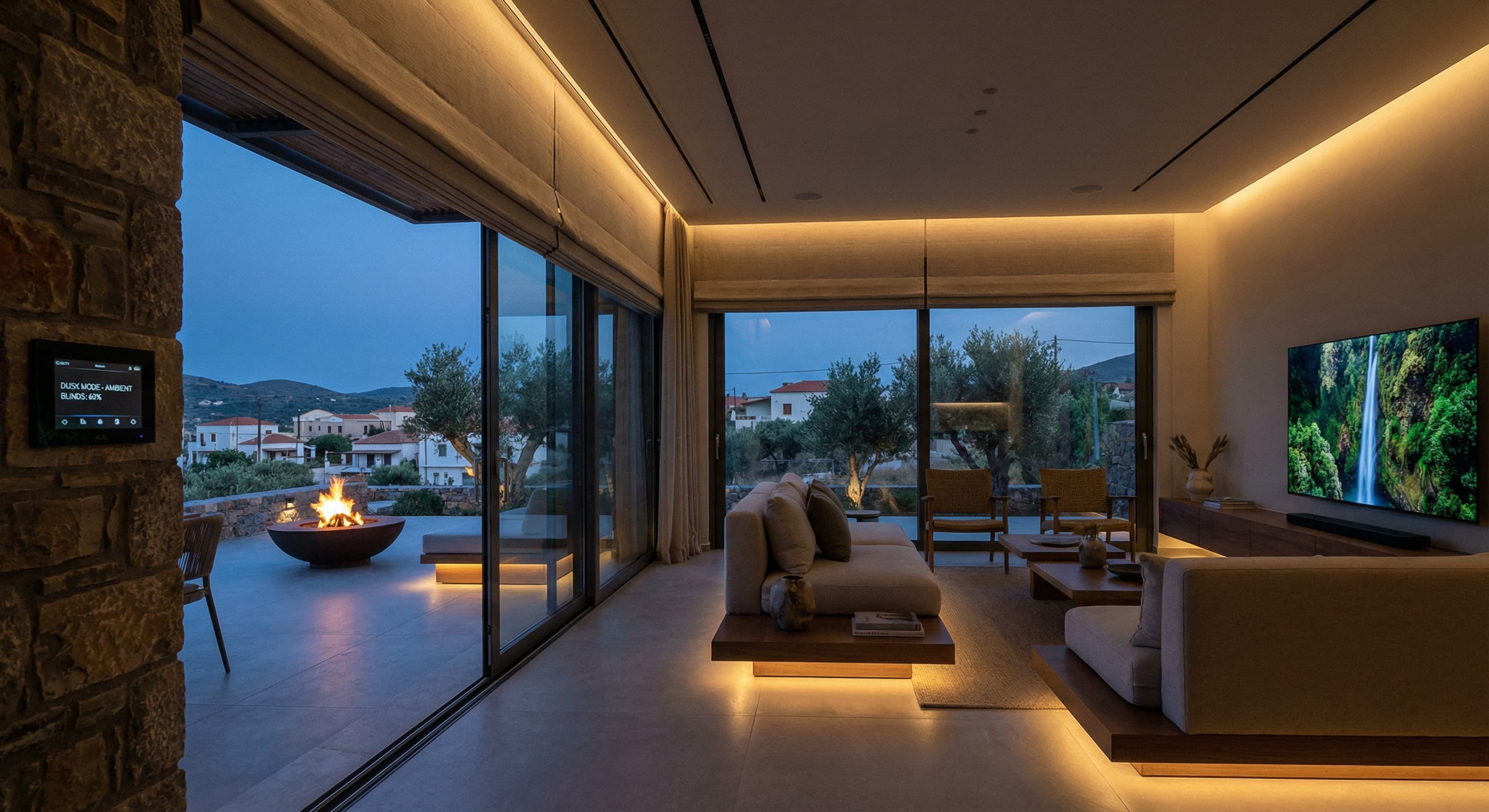
All three scenarios in the new decision share one thing: the value of energy depends on when it is consumed. A KNX system with energy management does this timing automatically:
- Measures in real time. Many of the smart meters installed so far do not give consumers easy access to real-time data. A KNX energy meter in the panel shows production, consumption and surplus at any moment.
- Switches loads on when the sun is out. When production exceeds consumption, deferrable loads start: dishwasher, pool pump, dehumidifier, electric towel rail.
- Coordinates the battery with the tariff. The system knows tomorrow's prices and decides when the battery charges and when it covers the home.
- Protects the supply. It limits large simultaneous loads (water heater, oven, EV charger) so the contracted capacity is never exceeded.
- Shows the result. A touch panel or app shows how many kWh came from the sun or the battery and how much money was saved.
Advice for homeowners and contractors
- Do not buy a balcony kit blind yet. Wait for HEDNO's specifications. They will define which equipment and connection methods are allowed.
- Check that you have a smart meter and an active ΥΔΕ. Without them the connection will not proceed.
- In an apartment building, check the building rules on changes to the facade before mounting panels on the railing.
- In a renovation or new build, plan ahead now: space in the panel for an energy meter, separate circuits for deferrable loads, and cabling for a battery and an EV charger. It costs far less now than later.
- Measure first, invest second. A few weeks of logged consumption shows whether a balcony system, a battery, or both make sense.
The Sync-Teq approach
The new decision opens self-generation to people without a roof of their own. But a panel or a battery on its own is not enough: without control over consumption, part of the energy is wasted. Sync-Teq does not install solar panels or batteries: we design the home's KNX automation, which measures, decides and shifts loads so that every kWh counts, working alongside your installer. Contact us for an assessment of your home or project.
Sources
- Joint Ministerial Decision ΥΠΕΝ/ΔΑΠΕΕΚ/102876/1958/2026, ΦΕΚ Β 5573/14.09.2026, via e-nomothesia.gr
- Powergame: Roadmap for balcony solar (draft decision, July 2026, in Greek)
- iefimerida: How to install balcony solar (annual output and savings estimate, in Greek)
- ered.gr: Net billing replaces net metering
Frequently asked questions
Is balcony solar allowed in Greece?+
Yes. Joint Ministerial Decision ΥΠΕΝ/ΔΑΠΕΕΚ/102876/1958/2026 (ΦΕΚ Β 5573, 14 September 2026) allows small self-consumption systems with a maximum output of 800 W and up to 1,000 W of installed panel capacity per supply point. Installation may start only after HEDNO (ΔΕΔΔΗΕ) publishes its safety specifications, due by 31 October 2026.
Do I get paid for surplus energy from a balcony solar system?+
No. Balcony systems are strictly for self-consumption. Energy that is not used at the moment it is produced is lost, which is why it pays to shift loads into sunny hours.
What do I need to connect a balcony solar system in Greece?+
A HEDNO smart meter, an active installer declaration (ΥΔΕ) for the supply, an online notification on HEDNO's platform, and a signed statement from an engineer or installer confirming the safety specifications are met.
Can I install a home battery without solar panels in Greece?+
Yes. The new decision allows standalone batteries for own consumption, with power up to 100% of the supply's contracted capacity, a power-flow direction sensor, telemetry, and no energy exported to the grid.
Is a battery without solar worth it?+
Mainly with a dynamic tariff: the battery charges in cheap hours and covers consumption in expensive ones. The return depends on the price spread and on doing this consistently every day, which an automation system handles automatically.
What changes in Greek net billing?+
Surplus energy is compensated at the Day-Ahead Market price or at the Special Market Price (ΕΤΑ) published by DAPEEP, and the three-party contract is replaced by two bilateral contracts: consumer with supplier and consumer with the RES aggregator (ΦοΣΕ).
Related Articles
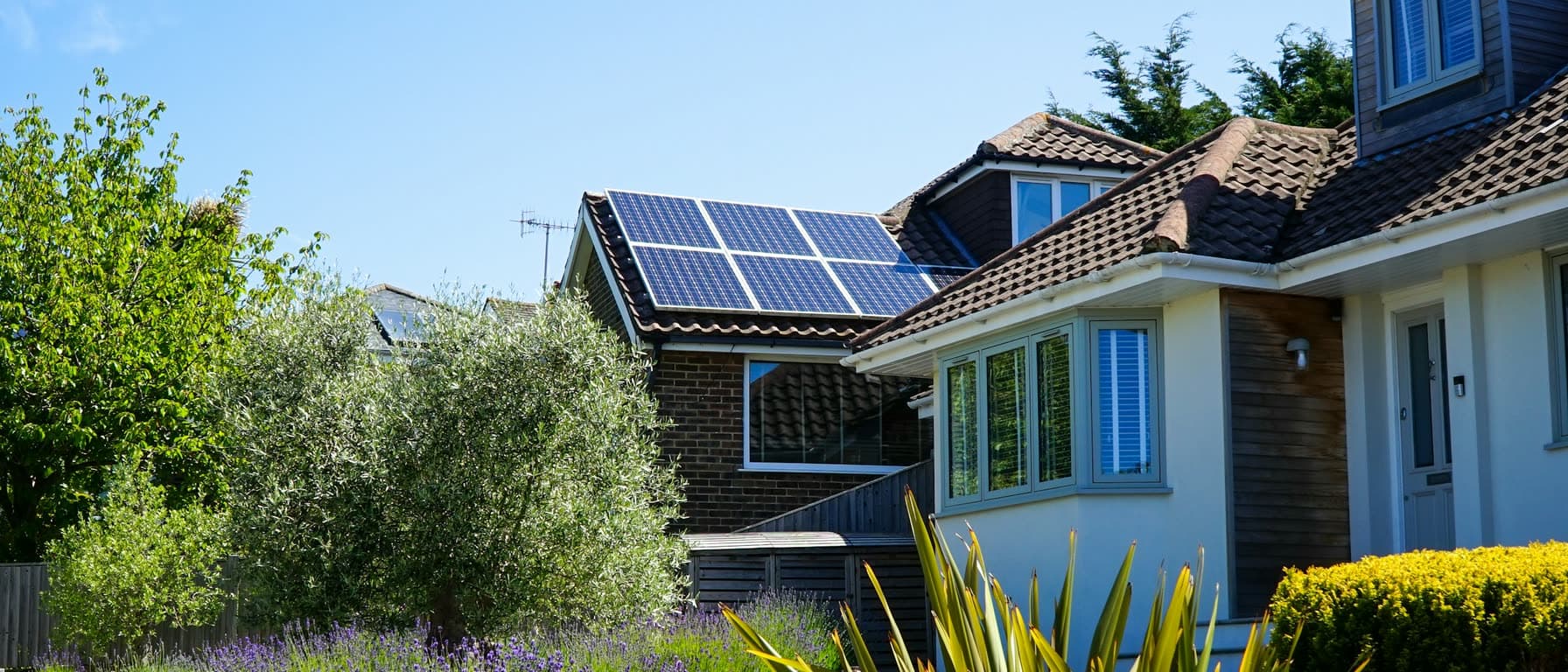
Smart Home and Solar in Greece: How Automation Raises Self-Consumption Under Net Billing
Under net billing, energy you send to the grid is paid at the hourly wholesale price, which at midday often drops close to zero. What applies in Greece, what is changing, and how a smart home makes solar pay off.
Read more →
Dynamic Electricity Tariffs: How a Smart Home Turns Hourly Prices into Real Savings
Dynamic pricing has arrived in Greece: hourly electricity rates, HEDNO smart meters, and automation that shifts your loads to the cheap hours without you thinking about it.
Read more →