
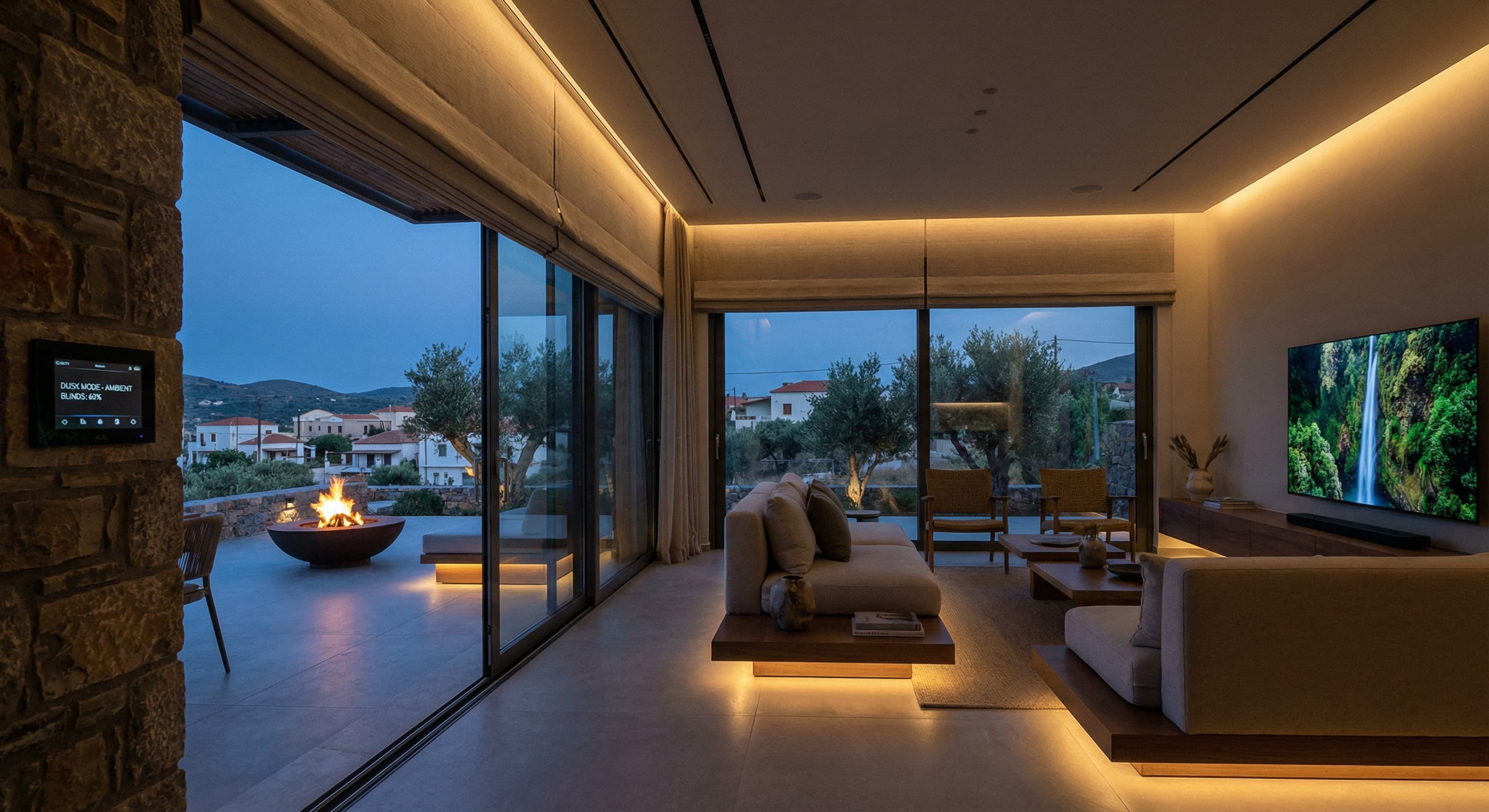
Έξυπνο σπίτι δεν είναι η Wi-Fi λάμπα — είναι το σύστημα
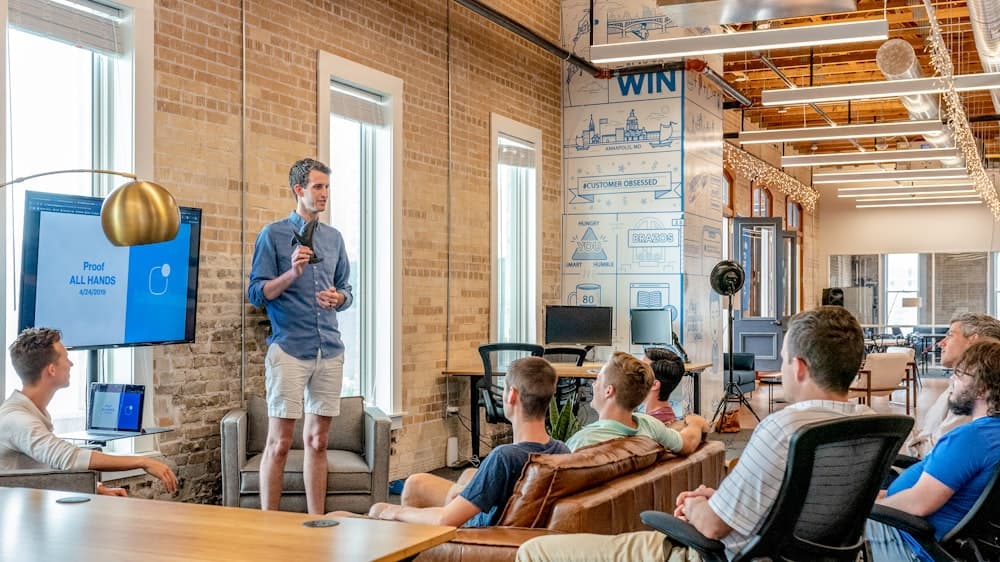
Οι περισσότεροι “μπαίνουν” στο smart home με μια Wi-Fi λάμπα ή ένα έξυπνο πρίζακι. Είναι ωραίο σαν πρώτο βήμα: ανοίγεις/κλείνεις από το κινητό, βάζεις ένα timer, λες “έγινε”. Μόνο που αυτό συνήθως είναι τηλεχειρισμός, όχι αυτοματισμός.
Ένα πραγματικά έξυπνο σπίτι (και ένα σωστά μελετημένο έξυπνο κτίριο) είναι υποδομή: δουλεύει με συνέπεια, έχει λογική, κλιμακώνεται, και δεν καταρρέει όταν αλλάξει router ή πέσει το internet.
Από το “app” στο “σύστημα”
- Smart gadget: μια συσκευή + ένα app + (συχνά) cloud.
- Smart home / smart building: ένα σύνολο από κανόνες, αισθητήρες, σκηνές και υποσυστήματα που συνεργάζονται.
Παράδειγμα gadget: “Άναψε τη λάμπα από το κινητό.”
Παράδειγμα συστήματος:
- “Όταν νυχτώσει και υπάρχει κίνηση στον διάδρομο, άναψε φωτισμό στο 20% για 2 λεπτά.”
- “Όταν ξεκινήσει το Movie Mode, χαμήλωσε φωτισμό σαλονιού, κλείσε ρολά, άναψε bias light, ενεργοποίησε AVR.”
- “Όταν φύγουν όλοι, κλείσε μη κρίσιμα φορτία, βάλε θέρμανση/ψύξη σε eco, όπλισε σενάριο ασφαλείας.”
Το δεύτερο είναι αυτό που κάνει την καθημερινότητα πιο άνετη — όχι το να ψάχνεις εφαρμογές.
Γιατί να σε νοιάξει
Για ιδιώτες
- Άνεση: σκηνές με ένα πάτημα, όχι “10 κινήσεις”.
- Ασφάλεια: φωτισμός πανικού, παρουσία, ειδοποιήσεις με νόημα.
- Οικονομία: HVAC/ρολά/φωτισμός δουλεύουν “έξυπνα”, όχι στα τυφλά.
- Λιγότερη τριβή: το σπίτι “καταλαβαίνει” αντί να σε κουράζει.
Για κατασκευαστές / μηχανολόγους / μελετητές
- Προδιαγράφεις λειτουργίες, όχι brands: “scene logic”, “occupancy-based HVAC”, “daylight harvesting”.
- Καλύτερη ενσωμάτωση Η/Μ: φωτισμός, σκιάσεις, κλιματισμός, μετρήσεις ενέργειας, BMS-like λογική.
- Αξιοπιστία & συντηρησιμότητα: τεκμηρίωση, διαχωρισμός layers, επεκτασιμότητα.
- Μείωση ρίσκου: λιγότερη εξάρτηση από cloud/λογαριασμούς/εφαρμογές που αλλάζουν.
Τι δεν πάει καλά με τη “Wi-Fi λογική”
Δεν είναι “κακή”. Είναι απλώς άλλη κατηγορία.
Συνήθη προβλήματα όταν το σπίτι χτίζεται από gadgets:
- Πολλά apps / πολλά οικοσυστήματα → χάος.
- Εξάρτηση από cloud → αν αλλάξει πολιτική/servers, αλλάζει και η λειτουργία.
- Αστάθεια σε δίκτυο (router, Wi-Fi κάλυψη, IP changes) → “κάτι δεν δουλεύει πάλι”.
- Μηδενική ενορχήστρωση → έχετε πολλές μεμονωμένες συσκευές, όχι ένα ενιαίο σύστημα.
Αν ο στόχος είναι “να ανάβω μια λάμπα από το κινητό”, οκ. Αν ο στόχος είναι να λειτουργεί το σπίτι καλύτερα, θες σύστημα.
Πώς μοιάζει μια σωστή αρχιτεκτονική
Σκέψου το σαν 3 επίπεδα:
- Υποδομή (ιδανικά wired για τα κρίσιμα) Φώτα, ρολά, HVAC interlocks, βασικές λειτουργίες που πρέπει να δουλεύουν πάντα.
- Ασύρματο όπου έχει νόημα Αισθητήρες/retrofit σημεία/συμπληρώματα (Zigbee / Z-Wave / Thread / Matter) — όταν η καλωδίωση δεν είναι πρακτική ή απαιτείται ευελιξία.
- Λογική & ενοποίηση Σκηνές, κανόνες, dashboards, integrations (home cinema, πολυζωνικός ήχος, cameras/network) χωρίς να “καταπίνει” την αξιοπιστία της εγκατάστασης.
Το γρήγορο τεστ: είναι όντως “έξυπνο”;
Απάντησε “ναι/όχι”:
- Αν πέσει το internet, δουλεύουν τα βασικά (φωτισμός/ρολά/θέρμανση);
- Υπάρχει manual control που πάντα λειτουργεί (διακόπτες/τοπικές εντολές);
- Υπάρχουν σκηνές (Movie, Night, Away) και όχι μόνο apps;
- Υπάρχει λογική με αισθητήρες, όχι μόνο φωνητικές εντολές;
- Μπορεί να επεκταθεί χωρίς να γίνει “κουβάρι”;
Αν τα περισσότερα είναι “ναι”, τότε μιλάμε για smart home / smart building.
Σχετικά Άρθρα
Οδηγία EPBD 2024/1275: τι αλλάζει για αυτοματισμό, έλεγχο και φόρτιση EV στα νέα κτίρια (οδηγός για μηχανικούς)
Η νέα Οδηγία για την Ενεργειακή Απόδοση των Κτιρίων φέρνει υποχρεώσεις για αυτοματισμό και έλεγχο σε κατοικίες και επαγγελματικά κτίρια, αυτόματο έλεγχο φωτισμού και προκαλωδίωση για φόρτιση. Τι ισχύει, με ποιες προθεσμίες, και πώς σχεδιάζουμε από τώρα.
Διαβάστε περισσότερα →
Ασύρματο KNX (KNX RF): έξυπνο σπίτι σε ανακαίνιση χωρίς σκαψίματα
Δεν χρειάζεται να ανοίξετε τοίχους για να αποκτήσετε επαγγελματικό αυτοματισμό. Πώς λειτουργεί το KNX RF, τι συσκευές υπάρχουν, πότε συνδυάζεται με καλωδιακό KNX και πότε προτιμάται από λύσεις όπως το Matter.
Διαβάστε περισσότερα →